







- Homepage
- Announcements
- Acoustics and Vibration Academy (AVA)
- Acoustic Events & Exhibitions
- Key Dates
- Congress Venue
- Distinguished Plenary Lectures
- Brochure
- Committees
- Program at a Glance
- Scientific Programme
- Session Schedules
- Submission Templates & Guidelines
- Social Programs
- Registration Fees and Details
- Accommodation
- Invitation Letter & Visa
- Sponsorship & Exhibition
- Exhibitors & Sponsors
- Student Paper Award
- Terms and Conditions of Attendance
- Publication Ethics and Malpractice Statement
- Editorial policy
- Contact Us
- IIAV
Please click here to register for the HVAC Noise and Vibration Education.
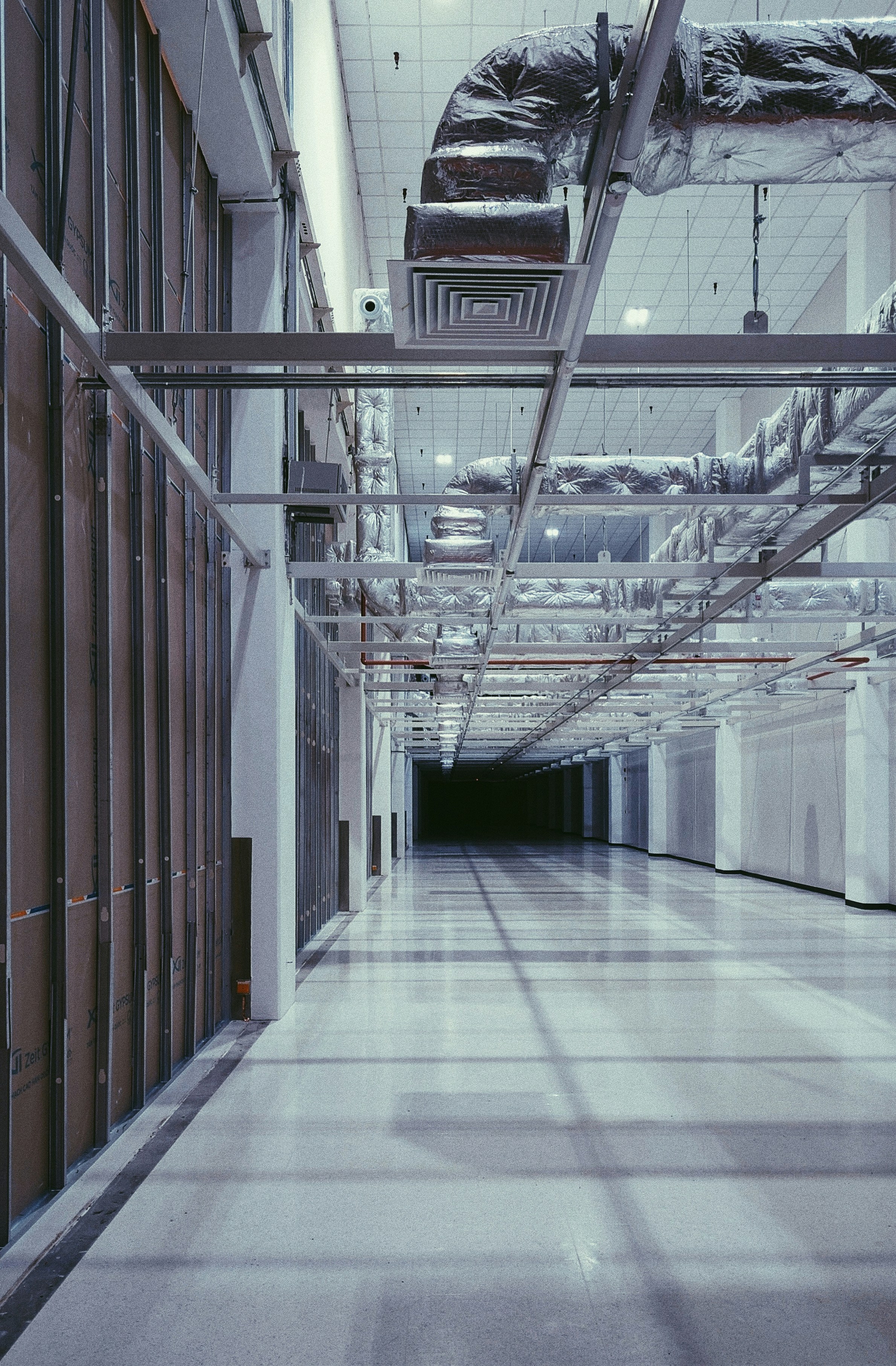
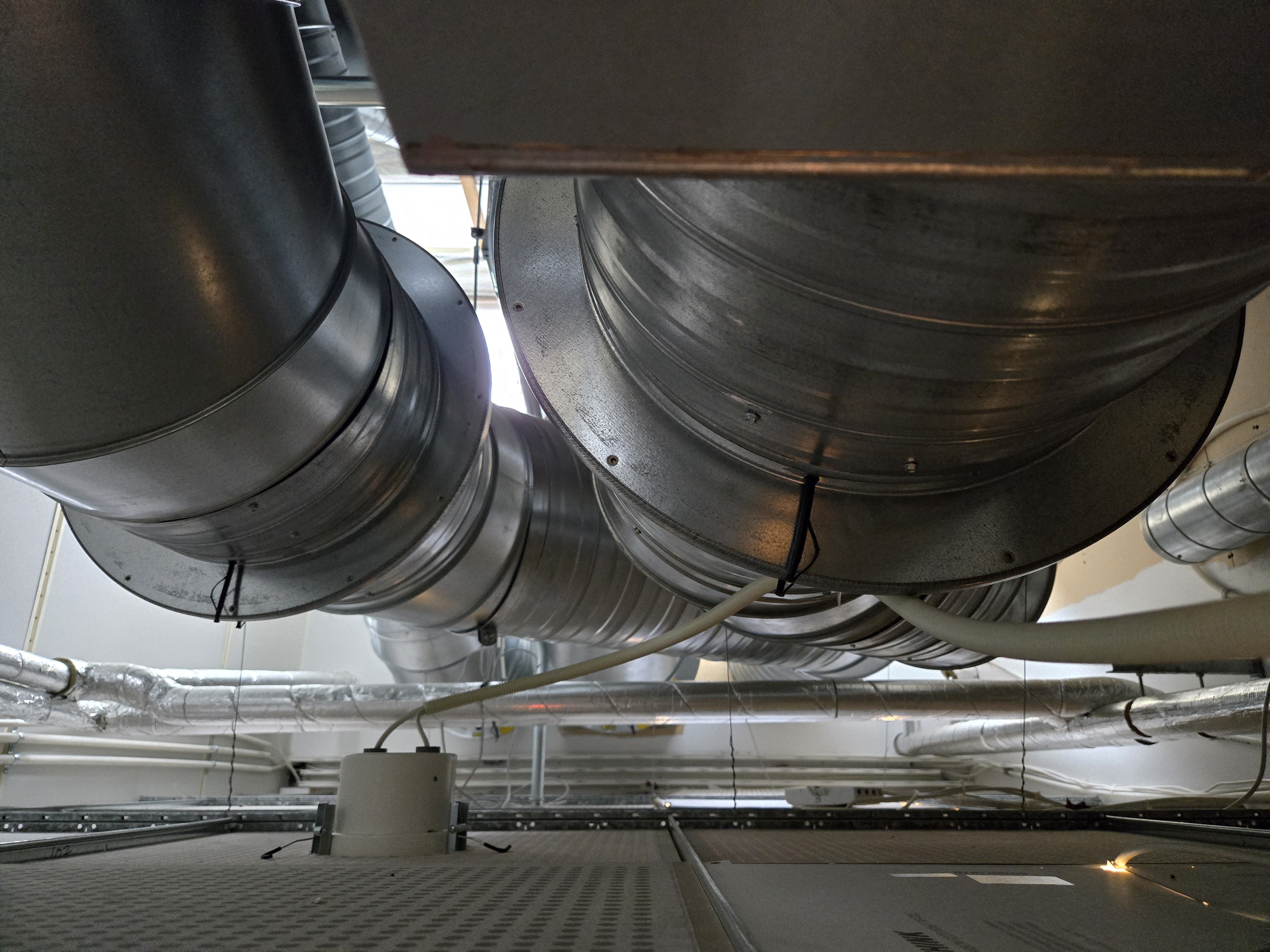
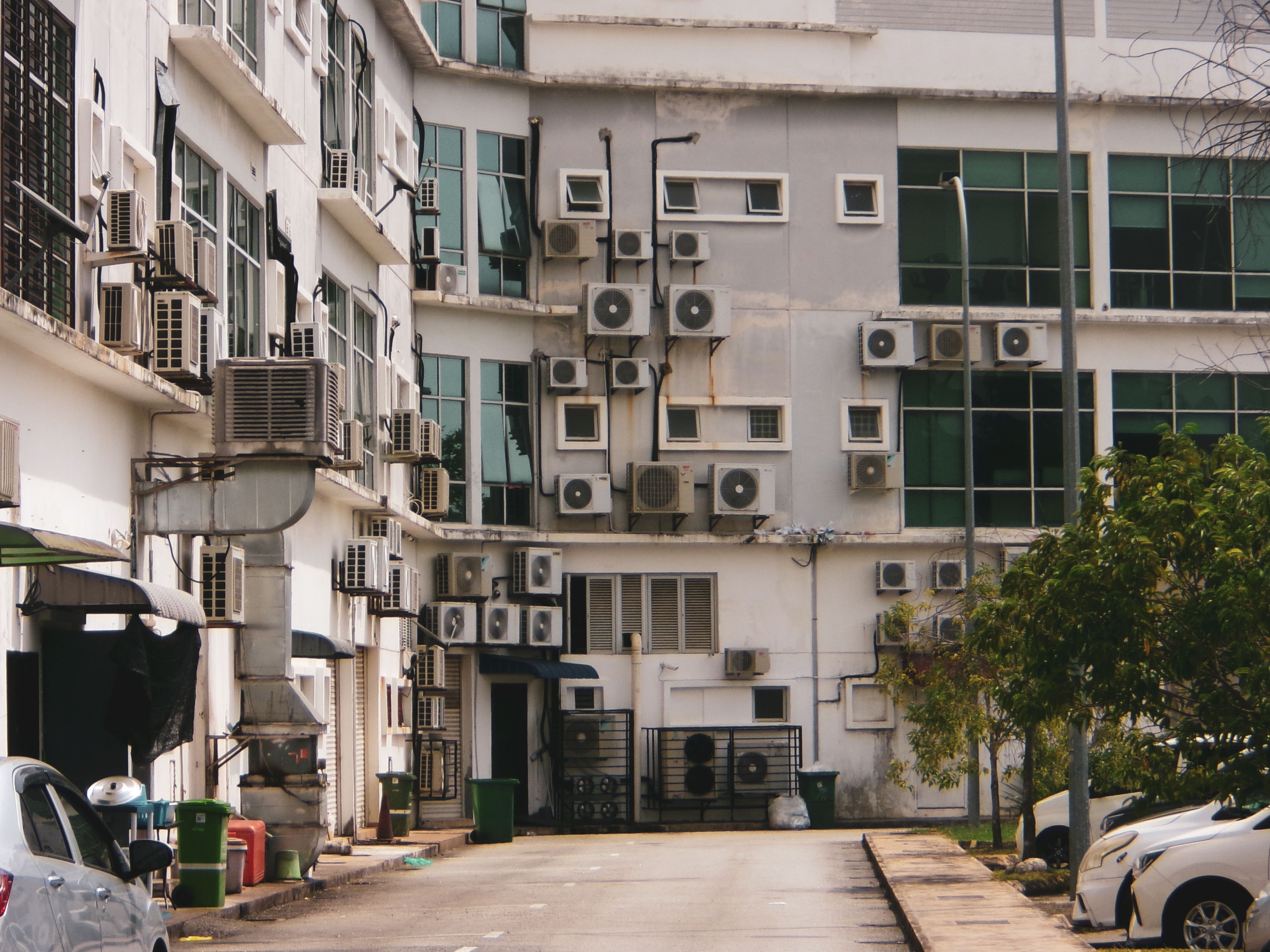
There is widespread use of heating ventilation and air-conditioning (HVAC) systems in a variety of small and large buildings. The main consideration facing the designer of such systems is to ensure that the plant provides the required amount of heated or cooled air throughout the building and does not create objectionable noise or vibration either in the areas served by the system or in adjacent areas. Because air must be supplied (and in many cases extracted) by a fan of some kind (axial, centrifugal, or mixed-flow), it is inevitable that some noise and vibration are generated. It is becoming common practice to use systems with very high airflow velocities, which introduce additional problems due to noise generated by the turbulent airflow that is created. However, despite the many difficulties that may be encountered, the noise produced by the system can be controlled if the system is correctly sized and care is taken to ensure that all elements of the system are properly installed.
Air-conditioning also makes it possible to use sealed windows, thus giving good sound isolation from most of the outdoor noise. This can be important with buildings situated close to airports, railroads, and highways. Once a completed HVAC system has been installed in a building, it is often very difficult and expensive to correct noise and vibration problems. Thus, great care should be taken at the design stage of a system to select all of the equipment items carefully and to minimize all possible sources of noise and vibration. A successful design can be obtained only by careful cooperation between the architect, ventilation engineer, and acoustical consultant. The primary considerations in selecting the mechanical equipment necessary for cooling, heating, and ventilating a building are related to (i) satisfying its intended use, and (ii) providing acceptable sound and vibration conditions in occupied spaces in the building. In critical cases such as conference rooms, auditoria, bedrooms in homes and hotels and lightweight buildings, the sound and vibration produced by the equipment must be minimized. In order to meet these mechanical and acoustical requirements, it is important to use the source-path-receiver concept.
About the organiser:

Malcolm Crocker
IIAV Executive Director
Auburn University - Auburn – USA
Malcolm Crocker is a Distinguished University Professor Emeritus at Auburn University (Auburn, Alabama, USA). He obtained his bachelor's degree in Aeronautical Engineering, and master's degree in Noise and Vibration Studies, both from Southampton University. He obtained his PhD in Acoustics from Liverpool University. He worked first at Supermarine Aircraft and Vickers Armstrong Aircraft in the United Kingdom and then for Wyle Labs, Huntsville, USA, on the Lunar Saturn V launch noise. He has held full professor positions at Purdue, Sydney and Auburn Universities. He was named Assistant Director/Acoustics of the Ray W. Herrick Laboratories, Purdue University in 1977, where he conducted research on vehicle and machinery noise from 1969 to 1983. At Auburn University, he served as Mechanical Engineering Department Head from 1983 to 1990 and Distinguished University Professor from 1990 to 2010, where he continues his research in acoustics, noise, and vibration. He has published over 300 papers in refereed journals and conference proceedings. In the last 50 years. Dr. Crocker has been principal investigator on over 70 research contracts for industry and government and has supervised over 50 graduate students. He has written nine books, including the four-volume, 2000-page Encyclopedia of Acoustics, 1997; Handbook of Acoustics, 1998; Handbook of Noise and Vibration Control, 2007; and Engineering Acoustics — Noise and Vibration Control, 2021 for John Wiley & Sons. The Encyclopedia won the 1997 award of the American Association of Publishers for excellence in professional and scholarly publishing in Physics. Crocker served as one of the founding directors of INCE/USA, 1971, one of the four founding directors of I-INCE in 1974, and one of the four founding directors of the International Institute of Acoustics and Vibration (IIAV) in 1995. He was general chair of INTER-NOISE 72 in 1972 and the President of INCE/USA in 1981. Crocker served as Editor-in-Chief of the Noise Control Engineering Journal 1973-1994 and the International Journal of Acoustics and Vibration (IJAV) 1996-2016. He has served as Executive Director of IIAV since 1995. He has numerous awards, including three honorary doctorates in Russia and Romania, and fellow and/or distinguished fellow of ASA, IIAV and ASME. Dr. Crocker received the 2017 Per Bruel Gold Medal from the American Society of Mechanical Engineers and the 2024 Rayleigh Medal from the United Kingdom's Institute of Acoustics, for his contributions to noise control and acoustics.
Participant's area I forgot my password Create a new account |
Photos of Istanbul                         |
 |

